Writing it Right: How I Researched my Novel about Eileen O'Connor, part 2.

Writing authentically about a real person, especially one being investigated for canonisation, is a daunting task that requires not just mindful research and reflection, but also devotion. Devotion to truth, to a frequent examination of my motivation and objectives, and devotion to the woman at the centre of my novel.
Fortunately, Eileen O’Connor inspires devotion, not just in me, but in her sisters, her contemporaries, and many of us who have come to know about her since her death. I knew when I first sat in her chapel that there was something special about her. I left her house in Coogee armed with her biographies, which I read diligently and which left a lasting impression of a remarkable, unstoppable woman whose drive and compassion led to the foundation of a ground-breaking domiciliary nursing service to care for the sick and dying in Sydney’s slums, despite being deathly ill and the brunt of a hostile backlash from church authorities.
When I was later inspired to write a novel about Eileen, I re-read everything and contacted Our Lady’s Nurses for the Poor to let them know what I was doing. I now see that the timing was perfect. Sr Greta Gabb interviewed me on the phone and once satisfied that my heart was in the right place and that my medical training and experience allowed me to understand Eileen’s medical condition, she became my friend and collaborator. Sr Greta wrote and emailed me with historical details and anecdotes about Eileen. She and Sr Margaret Mary Birgan reviewed the first draft of the manuscript and prayed for its publication.
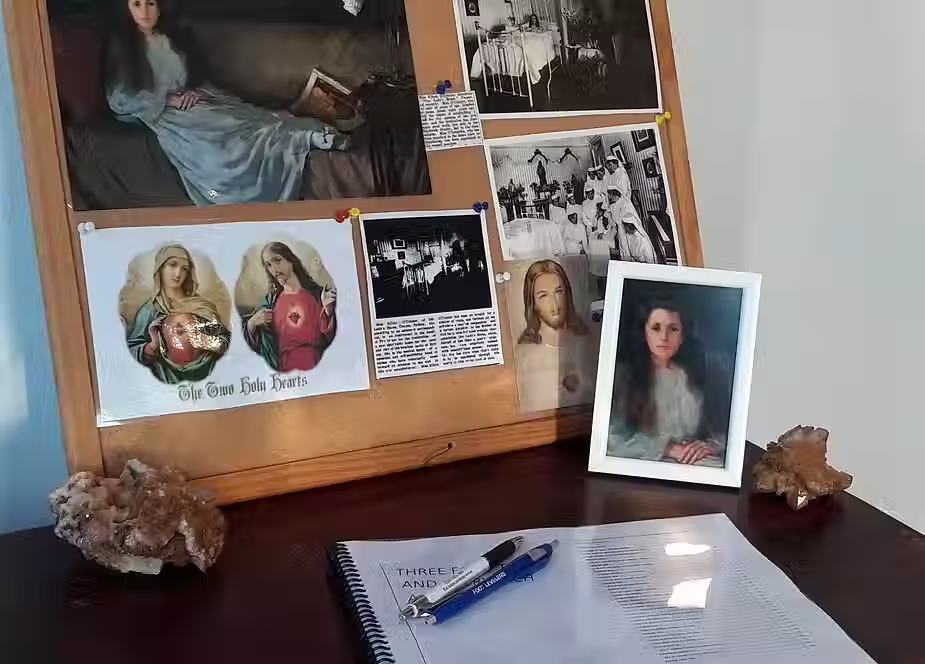
In January 2020, I went to Sydney to attend the annual mass to commemorate Eileen’s death, and spend a delightful day with the sisters. We spoke about Eileen, and about the manuscript. I was given access to the convent’s archives, to read Eileen’s personal correspondence and get a real sense of how she spoke. I studied copies of her X-rays. It was a profoundly emotional experience to hold in my own hands concrete evidence of her dire illness and constant pain from the tuberculosis infection that had destroyed bones in her spine.
I walked the streets of Surry Hills and Redfern, getting to know them as Eileen would once have done. Tracking down her known childhood homes. Comparing the modern streetscapes with archival photographs. Taking photos. When we first meet Eileen in the novel, she is watched by a neighbouring child, sitting on a front doorstep, peeling potatoes. I needed to find that step, so I could see the scene through Kathleen’s eyes. And I did, the perfect step was on the opposite side of the street, just a few doors down from Eileen’s former front door.

I wandered around Coogee, working out where Eileen had lived before moving to Dudley Street, where she had been carried to get to church or the tram stop, where she had taken photographs at Coogee Rocks. The cemetery where her nurses are buried. There was a lot of walking, somehow, fortuitously scheduled in a few days before Sydney was choking in bushfire smoke from the terrible fires of the summer of 2019-2020.
A few weeks after my return home, the world shut down for Covid and travel became impossible. I kept in touch with the sisters until Sr Margaret-Mary died in 2023 and Sr Greta became unwell in her nineties. Looking back, I see the serendipity in that window of opportunity. The sisters' experience, love and compassion deepened my understanding of Eileen and infuse the pages of the novel.


Comments